

Stratcann’s Growing Relationships Burlington Oct 21, 2026
Stratcann announced that it is excited to return to southern Ontario, bringing Growing Relationships back to Burlington
Growing Relationships is a one-day B2B event designed to support real business outcomes in the Canadian cannabis industry. By bringing together retailers, producers, and industry service providers in a focused, regional setting, the event creates space for meaningful conversations, stronger relationships, and insights that translate into action after the event.
Growing Relationships offers an efficient way to connect with multiple industry stakeholders in one day — reducing noise while increasing the quality of engagement. Attendees consistently value the opportunity to step out of transactional conversations and into discussions that lead to follow-ups, collaboration, and long-term partnerships.
Our events are intentionally delivered in underserved communities across Canada to increase access to industry gatherings, strengthen regional ecosystems, and ensure that voices from across the country are part of the broader industry conversation.
The Burlington event will feature curated networking activities and industry roundtable discussions, with a strong focus on shared solutions and peer-to-peer learning. An essential component of Growing Relationships is active community participation—creating space for diverse perspectives on current industry challenges and for candid discussion of how the industry can operate more effectively.
For more information visit: https://stratcann.com/growing-relationships/

Stratcann’s Growing Relationships Kamloops Sep 21, 2026
Hosted by Stratcann, Growing Relationships is a one-day B2B event that brings together retailers, producers, and industry services for networking, brainstorming, discussion, and learning. It’s designed to support business growth by providing opportunities and space to build connections, share insights, and participate in community conversations.
The Kamloops event will feature curated networking activities and industry roundtable discussions, with a strong focus on shared solutions and peer-to-peer learning. An essential component of Growing Relationships is active community participation—creating space for diverse perspectives on current industry challenges and for candid discussion of how the industry can operate more effectively.
For more information visit: https://stratcann.com/growing-relationships/
Navigating Direct-to-Retail: Securing B2B Efficiencies and Protecting Producer Margins
The evolution of provincial “Direct-to-Retail” and farm-gate frameworks—particularly across British Columbia and Ontario—has fundamentally reshaped the Canadian cannabis landscape. For both micro-cultivators and standard licensed producers (LPs), the ability to bypass traditional central distribution boards offers a vital lifeline. Amid persistent market-wide price compression and stabilizing retail growth, selling directly to independent brick-and-mortar stores allows producers to reclaim and protect their hard-earned margins.
However, this structural shift is a double-edged sword. While direct delivery eliminates the middleman, it simultaneously introduces an immense administrative burden. LPs utilizing these frameworks find themselves operating not just as cultivators or processors, but as their own distributors, sales forces, and logistics coordinators.
Decentralized Distribution
Managing dozens of individual retail relationships without a central hub can create operational bottlenecks. Transitioning away from single, bulk shipments to handling multi-destination SKU availability, tier pricing, and localized shipping windows frequently leads to inventory fragmentation.
Plus, every decentralized transaction must still align perfectly with strict provincial tracking and federal reporting mandates. Manually re-entering sales data into secondary compliance systems invites transcription errors, shipping delays, and regulatory vulnerability.
Streamlining the B2B Pipeline
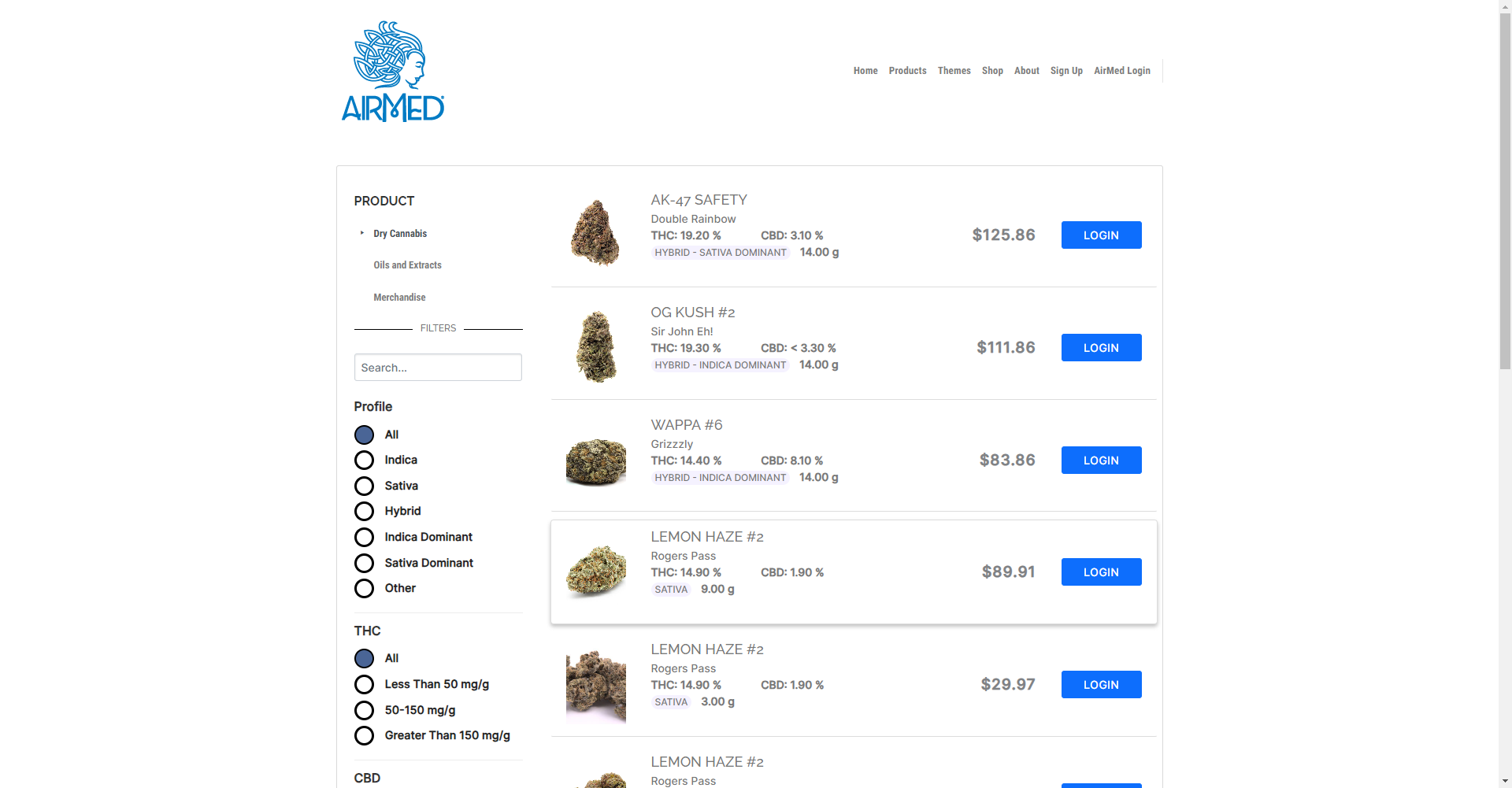
To maintain shelf space and keep overhead manageable, LPs should transition away from manual data entry and disjointed software stacks. Forward-thinking producers are adopting integrated, native direct-delivery portals. Utilizing tools like AirMed’s proprietary WordPress plugin architecture, producers can securely connect their live, facility-side inventory directly to buyers.
When a retailer logs into a dedicated direct-delivery portal, they interact with accurate, real-time data pulled straight from the producer’s cultivation and processing environment. This tight, native integration removes human error, ensures absolute consistency under Good Production Practices (GPP), and dramatically reduces administrative overhead.
Securing the Digital Shelf
In an increasingly mature and competitive market, operational efficiency can be a core requirement for survival. By automating the hand-off between the digital point-of-sale and the physical facility floor, producers can streamline administration, satisfy retail expectations, and realize the premium margins promised by the direct-to-retail model.
For demo of our Wordpress plugins in action, visit the Live AirMed WordPress Direct Delivery Plugin Demo Site.

The Shift from Reactive to Proactive: Building a Quality Culture
In the early years of the Canadian cannabis industry, “quality assurance” was often viewed as a final checkpoint—a necessary hurdle at the end of a batch to ensure compliance before a product reached the vault.
However, as the market matures in 2026, we are seeing a significant shift. Cannabis producers are moving away from this reactive model and toward a proactive “Quality Culture” where compliance is integrated into every heartbeat of the facility.
Moving Beyond “Correction”
A reactive approach typically relies on catching errors after they occur. Whether it’s a missed signature on a sanitation log or a slight deviation in environmental parameters, discovering these issues during a retrospective review can lead to costly delays, batch re-processing, or even destruction.
Building a proactive Quality Culture means shifting the focus from correction to prevention. This transition is powered by the move toward digital-first operations. When a facility utilizes real-time data entry and integrated Quality Management Systems (QMS), the “QA check” happens at the point of activity—not days later in a review.
Empowering the Frontline
A true Quality Culture isn’t just the responsibility of the QAP (Quality Assurance Person); it belongs to the entire team. By using intuitive, accessible digital tools, frontline staff are empowered to take ownership of their work.
When a technician can quickly complete a custom e-form on a tablet or receive an automated alert when a task is due, quality becomes a natural part of the workflow rather than an administrative burden. This transparency fosters a sense of pride and accountability, ensuring that every worker understands how the specific task contributes to the safety and consistency of the final product.
Data-Driven Confidence
For management, the benefits of a proactive culture are clear. Having a “single source of truth” provides a real-time window into facility health. Instead of wondering if the team is audit-ready, you can see it on a dashboard. This level of oversight allows for continuous improvement—identifying small trends before they become large problems.
As we look toward the future, the most successful Canadian producers will be those who view quality not as a hurdle, but as a shared value. By leveraging technology to support their people, these operators are building a foundation of trust with both regulators and consumers, ensuring a sustainable future in an increasingly competitive landscape.
Read more about our quality management here: https://airmedcloud.com/intro-airmed-5/
Learn about the AirMed automation features here: https://airmedcloud.com/airmed-5-templates/
For more information visit our Software page.


ABLE BC Industry Reception: Sep 9 in Vancouver
Join ABLE BC on Monday, September 21, at 6 pm at Donnellan’s Irish Pub in Vancouver for an evening of networking and industry connection.
Meet ABLE BC’s Board of Directors, connect with fellow industry professionals, and hear updates on ABLE BC’s recent advocacy work.
The association says it is pleased to welcome Minister of Agriculture and Food Lana Popham, along with senior officials from both the BC Liquor Distribution Branch and as well as the Liquor & Cannabis Regulations Branch.
The Alliance of Beverage Licensees (ABLE BC) is the voice of British Columbia’s bars, pubs, and private liquor and cannabis stores.
Capacity is limited. To register for the event visit:
https://ablebc.ca/

Demystifying Health Canada’s March 2026 Cannabis Sampling Guidelines
In March of this year, Health Canada published a comprehensive guidance document outlining the exact requirements and authorized activities for intra-industry cannabis sampling.
Understanding these clarified rules lets Licensed Producers (LPs) build compliant, high-impact marketing programs while protecting their licenses.
What Defines a Compliant “Cannabis Sample”?
According to the federal regulator’s March 2026 guidance, a cannabis sample is specifically defined as a product given for free to an authorized provincial or territorial retailer for educational and marketing purposes.
To stay on the right side of the law, every sample you distribute must meet the following baseline criteria.
- It Must Be a Finished Product: You cannot hand out raw, loose flower. Samples must be fully packaged, labelled, and prepared for retail sale in accordance with standard Health Canada guidelines.
- Excise Stamps are Required: Even though the product is being distributed for free and is not intended for consumer resale, it must bear a valid provincial excise stamp before it leaves your facility.
- Recipients Must Be Authorized: Samples can only be gifted to individuals legally authorized to sell or distribute cannabis (such as licensed retail store staff acting in their professional capacity). Giving samples to the general public remains strictly prohibited.
Transit, Storage, and the “Dwelling-House” Rule
One of the most valuable aspects of the March 2026 guidance is the clarification around transportation logistics. Because sales representatives often carry samples to industry events or retail store visits, Health Canada has outlined clear boundaries for cannabis in transit:
The Storage Rule: All samples must officially be stored at the licensed site specified on your federal license.
Temporary Holds: While in transit, samples may be temporarily held by third-party couriers, in secured vehicles, or in transport warehouses as part of a documented distribution plan. However, this hold must be brief and strictly necessary for delivery.
The Dwelling-House Prohibition: Under no circumstances may cannabis samples be stored or temporarily held at a personal residence (dwelling-house), even if it belongs to a sales representative.
Traceability: The Foundation of Compliant Sampling
Just like commercial inventory, every single sample must be fully traceable. Under the new guidance, LPs are required to maintain highly detailed distribution logs. These records must include the exact product details, the name of the recipient, and the physical address where the sample was delivered.
By maintaining meticulous, real-time digital record-keeping for your sample inventory, your facility can confidently build retail relationships, empower budtenders with product knowledge, and ensure that a sudden audit never disrupts your brand’s momentum.
To review the complete framework directly on Health Canada’s portal, visit:https://www.canada.ca/en/health-canada/services/cannabis-regulations-licensed-producers/activities-cannabis-samples.html
Cultivating Total Visibility with AirMed
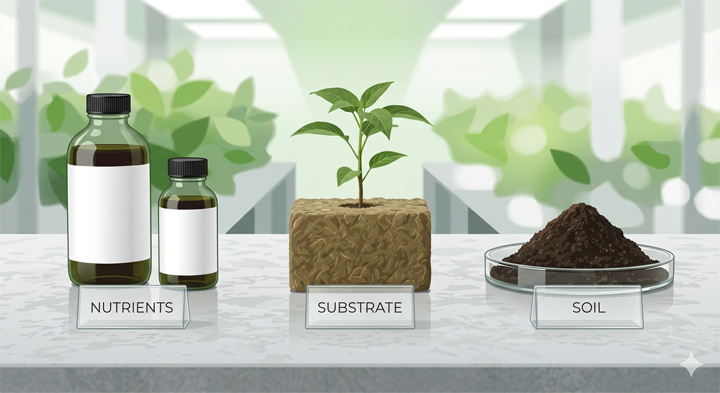
The true cost of cannabis production extends beyond genetics. Expenses are anchored in facility overhead, specialized nutrients, custom substrates, and packaging components.
Operational accounting requires a framework linking consumables to lineage. Tracking nutrients, substrates, and packaging to lots transforms calculation into science.
When every millilitre of nutrient, millimetre of substrate, and unit of packaging is tracked directly against specific lots, your cost-per-gram calculation transforms from a rough estimate into an exact science. Linearly tying these facility consumables to your standard plant records provides granular visibility, ensuring that a spike in a specific raw material’s cost doesn’t silently erode your bottom line.
AirMed closes the visibility gap by integrating your non-cannabis inventory. Our software logs and monitors non-cannabis inputs such as growth media, substrates, and fertilizers.
This comprehensive ecosystem helps producers:
- Forecast: Anticipate material requirements for cycles, optimizing supply needs via history.
- Prevent Stockouts: Set alerts for nutrients, labels, or packaging components, keeping workflows moving without halts.
- Track ROI: View cost data by the gram, helping teams identify profitability across strains.
By tracking all materials from the moment they enter your facility until they are consumed in your production lines, AirMed provides real-time oversight.
Read more about our inventory management here: https://airmedcloud.com/airmed-inventory-management/
For more information visit our Software page.
What the April 2026 CTLS Updates Mean
One of the most critical administrative steps for Canadian cannabis businesses is the Notice of New Cannabis Product (NNCP), which requires submitting detailed product specifications to Health Canada at least 60 days before the scheduled launch date.
Until recently, once a notice was submitted, making corrections, altering launch dates, or withdrawing a product that had changed direction was a manual process.
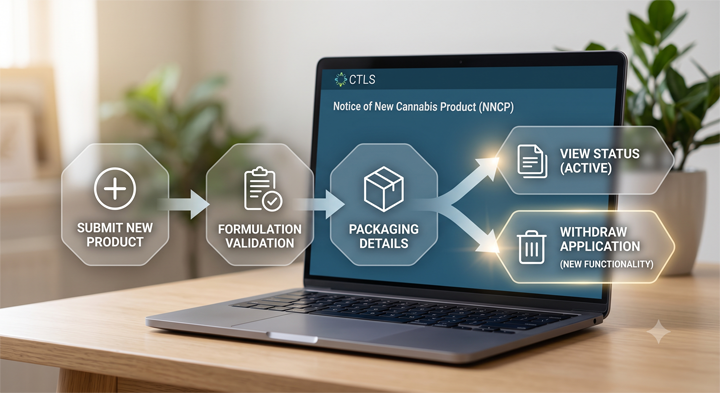
That changed on April 14, 2026, when Health Canada officially updated the Notice of New Cannabis Product Guide and introduced new functionalities directly into the CTLS.
This update offers a subtle but valuable change in how processing license holders manage their launch pipelines. Here is what the new system means for your operational workflows.
More Control: Viewing and Withdrawing Submissions
The most significant functional upgrade in the April 2026 release is the ability for CTLS users to directly view and withdraw pending NNCPs.
Previously, if a packaging supplier faced a delay or a formulation was adjusted post-submission, LPs had to navigate back-and-forth communications with Health Canada to correct or pull the application.
Under the updated system, your compliance and product development teams can:
- Directly audit pending launches within the portal to ensure all photos, net weights, and cannabis class designations are accurate.
- Instantly withdraw a notice if a product’s launch window changes, preventing the system from locking in inaccurate timelines.
- Reduce clerical errors before they trigger a regulatory inquiry or delay your target launch date.
Easing the Administration of Complex Launches
As the industry continues to innovate with complex 2.0 and 3.0 formulations (such as multi-unit edibles, specialty vapes, and co-packaged products), the amount of technical data required for an NNCP has increased.
Health Canada’s updated guide places a stronger emphasis on accurate pre-submission data validation.
When you have a single, reliable system of record for weights, unit counts, and formulation details, completing and managing these newly flexible CTLS notices becomes a streamlined, stress-free part of your product lifecycle.
To read the official release and review the updated guide visit:
https://www.canada.ca/en/health-canada/services/drugs-medication/cannabis/industry-licensees-applicants/updates-cannabis-industrial-hemp.html

Canada Day 2026: The Road We’ve Travelled
On this Canada Day we’d like to reflect on the road legalized cannabis has travelled in Canada so far.
2001: Medical Cannabis Framework Evolution
The Marihuana Medical Access Regulations (MMAR) came into force on July 30, 2001. This was Canada’s original medical cannabis framework, establishing the first legal pathways for patient possession and personal production licenses. MMAR was created to give patients a secure, legal supply of cannabis if they suffered from terminal illnesses or severe chronic conditions (like multiple sclerosis, spinal cord injuries, or severe arthritis). Before the MMAR, possessing or producing cannabis for any reason was strictly a criminal offense. The MMAR changed the legal landscape by establishing that Canadians had a constitutional right to access cannabis if a physician deemed it medically necessary.
2013: Marihuana for Medical Purposes Regulations (MMPR)
While groundbreaking, the MMAR model faced several practical challenges, so Health Canada decided to phase out the MMAR and transition to a commercialized, highly regulated system with strict quality control. This led to the creation of the MMPR, which removed home-grows entirely and birthed the modern “Licensed Producer” (LP) industry that exists today.
The initial implementation of MMPR occurred on June 19, 2013. This regulation created the commercial framework, shifting production away from home-grows toward a regulated network of licensed commercial producers (LPs). MMPR fully replaced MMAR April 1, 2014.
2016: Access to Cannabis for Medical Purposes Regulations (ACMPR)
ACMPR was announced August 11, 2016 and came into Force: August 24, 2016 and was enacted following the Allard v. Canada court ruling. This framework combined the commercial LP structure of the MMPR while restoring the legal right for authorized patients to grow a limited supply at home.
2017: Cannabis Act (Bill C-45)
The Cannabis Act established the framework for recreational (adult-use) cannabis in Canada. Bill C-45 was passed by the House of Commons on November 27, 2017, with the final senate vote on June 19, 2018. The act received Royal Assent and became law. on June 21, 2018, but officially came into force on October 17, 2018, known as Legalization Day in Canada.
This officially replaced the previous medical regulations (subsuming medical access under the broader Cannabis Act) and fully legalized adult-use recreational dried flower and oils nationwide.
2019: Amended Cannabis Regulations (“Cannabis 2.0”)
Exactly one year later, on October 17, 2019, amendments legally permitted the production, distribution, and sale of alternative product formats, specifically edibles, extracts, and topicals.
2022: The Beverage Equivalency “Math Fix”
Early regulations suffered from a flawed math formula regarding public possession limits for liquid cannabis beverages. In December 2022 Health Canada corrected the formula, unlocking the commercial potential of the cannabis beverage category.
2025: “Omnibus” Regulatory Streamlining
Following the independent Expert Panel’s legislative review, Health Canada introduced a massive regulatory relief package to alleviate administrative burdens on Licensed Producers (LPs).
2026: Packaging and Labelling Modernization
In March 2026, a major shift in packaging rules hit full enforcement. The initial, heavily restrictive “plain packaging” mandates were updated to support eco-friendly initiatives and better consumer education.
2026: Mature Market
Today, the cannabis market in Canada is a highly mature, disciplined industry focused on margin protection and hyper-localized supply chains. Statistics Canada figures show that small independent operators form the true backbone of the market—over 51% of legal retail stores employ fewer than four people, and micro-cultivation licenses remain the most popular category. General volume-driven cannabis has faced heavy price compression. To survive, smaller cultivators are relying on hands-on methods (hand-trimming, hang-drying, rare genetics) to earn formal “Craft” designations. Where provincial frameworks allow, micro-producers and boutique processors are shifting away from massive central distribution hubs to utilize direct-delivery capabilities, connecting directly with independent retail networks to protect product freshness and margins.
To read Health Canada’s deep dive into the legislative background, policy goals, and public health data compiled since 2018, review the Government of Canada Cannabis Act Progress Report. https://www.canada.ca/en/health-canada/programs/engaging-cannabis-legalization-regulation-canada-taking-stock-progress/document.html
For a highly detailed chronological deep dive into the country’s drug legislative changes stretching back to 1908, read the Wikipedia Legal History of Cannabis in Canada Page. https://en.wikipedia.org/wiki/Legal_history_of_cannabis_in_Canada
To explore how public opinion shifted and understand the social factors that ultimately influenced the federal government to draft Bill C-45, see The Canadian Encyclopedia Legalization Summary. https://thecanadianencyclopedia.ca/en/article/marijuana-legalization-in-canada
To listen to or read an exploration of how a virtually unknown plant became a multibillion-dollar legal market after nearly a century of bans, check out the CBC Radio: The Long, Strange Story of Pot Prohibition in Canada feature. https://www.cbc.ca/radio/ondrugs/the-long-strange-story-of-pot-prohibition-in-canada-1.4541890
Stratcann’s Growing Relationships Victoria July 16, 2026
Hosted by Stratcann, Growing Relationships is a one-day B2B event that brings together retailers, producers, and industry services for networking, brainstorming, discussion, and learning. It’s designed to support business growth by providing opportunities and space to build connections, share insights, and participate in community conversations.
The Victoria 2026 event includes networking activities and roundtable industry discussions. An essential component of Growing Relationships is engaging the community in discussions and brainstorming on current industry issues from diverse perspectives. Attendees will enjoy several networking opportunities, engaging discussions and activities, presentations, and a catered lunch.
For more information visit: https://stratcann.com/growing-relationships/

Hemp Regulations: Government of Canada Consultation until June 30
The Government of Canada is inviting comment on potential amendments to the Industrial Hemp Regulations. The amendments aim to reduce regulatory requirements and administrative burden, while continuing to meet our public health and public safety objectives.
“These changes would support our commitment to reducing regulatory red tape, while maintaining key control measures for industrial hemp.”
The focus of this consultation includes the following stakeholders.
- current and potential industrial hemp licence holders
- industrial hemp industry associations
- cannabis licence holders
- cannabis industry associations
- Indigenous groups
- professional associations
- federal partners (departments and agencies)
- provinces and territories
The Notice of Intent was published in the Canada Gazette, Part I on May 16, 2026 and the deadline to submit comments is June 30, 2026.
To participate, send your comments in an email to cannabis.consultation@hc-sc.gc.ca. Use the subject line: “Consultation on potential amendments to the Industrial Hemp Regulations”.
For more information visit: Government of Canada
To read the official announcement visit: Government of Canada Gazette
Profile: Retail Cannabis Council of Manitoba
The Retail Cannabis Council of Manitoba (RCCMB) is the unified, non-partisan advocate for independent cannabis retailers across the province, dedicated to fostering a safe, equitable, and sustainable industry. We serve as a respected voice at the local, provincial, and national government levels, actively representing retailers in discussions regarding legal and regulatory frameworks.
The mission of the RCCMB is to empower independent business owners by ensuring their interests are prioritized before regulatory changes are enacted. By advocating for fair regulations, the elimination of red tape, and the eradication of the illicit market, we work to cultivate a legal cannabis sector that benefits communities, businesses, and consumers alike.
The Council is committed to advancing the interests of its members by providing essential representation, shaping policies that encourage sector growth, and promoting high-quality, safe industry standards.
Through collaboration with government bodies, industry stakeholders, and the public, the RCCMB fosters an environment where independent cannabis retailers can thrive while contributing to a responsible and robust provincial market.
For more information please visit: https://rccmb.ca/

Enhancing the Medical Cannabis Patient Journey
As the Canadian cannabis industry continues to mature, we are witnessing a renewed focus on the medical sector. While recreational retail often captures the spotlight, the medical market remains a vital pillar of the industry, characterized by a patient base that prioritizes consistency, reliability, and professional service. In this landscape, technology is doing more than just tracking plants; it is becoming a critical tool for enhancing the “human side” of patient care.
Bridging the Gap with Integrated Portals
The initial interaction between a patient and a Licensed Producer (LP) often happens within a digital portal. Historically, these were simple e-commerce sites, but today, they have evolved into sophisticated interfaces. By integrating these portals directly into a seed-to-sale management system, LPs can streamline the medical document verification and registration process.
For a patient seeking relief, a delay in paperwork can be a significant barrier. Modern software ensures that onboarding is efficient and accurate, allowing patients to access their medicine without unnecessary administrative friction. When the technology works seamlessly in the background, the LP can spend less time on data entry and more time on patient support.
Transparency and Trust through Real-Time Data
One of the most significant benefits of modern software is the ability to provide transparent, real-time inventory levels via API (Application Programming Interface) integrations. For medical patients—many of whom rely on specific terpene profiles or cannabinoid ratios for chronic conditions—knowing that their medicine is in stock is essential for peace of mind.
When an LP’s internal inventory system communicates directly with the patient-facing shop, it eliminates the frustration of “out-of-stock” surprises after an order has been placed. This transparency builds long-term trust. A patient who knows they can rely on their provider for a consistent supply is a patient who remains loyal.
Personalized Care through CRM Tools
Behind the scenes, Customer Relationship Management (CRM) tools are helping LPs move away from a “one-size-fits-all” approach. By securely analyzing patient preferences and order histories, providers can offer helpful, personalized resources, such as educational content relevant to a patient’s specific needs or notifications when a preferred strain is back in stock.
This proactive communication demonstrates that the LP views the patient as an individual rather than just a number in a database. Patient retention is a natural byproduct of a supportive, tech-enabled experience. By using digital tools to remove obstacles and provide clear information, the industry is ensuring that medical cannabis remains an accessible and reliable option for all Canadians.
View our demo sites that show integration with our database and a Word Press website using our API and proprietary WP plug-in.
For more information visit our Software page.

Tax Reform Advocacy in Canada’s Cannabis Industry
On April 23, 2026, the Cannabis Council of Canada (C3)—the national voice for Canada’s licensed producers and processors—submitted a significant update to the Office of the Commissioner of Lobbying. This isn’t just another routine filing; it is a formal, data-backed demand for the federal government to address the “punitive” tax regime that is currently stifling the legal market.
C3 is actively engaging with departments like Finance Canada and Innovation, Science and Economic Development (ISED) to deliver a clear message: The tax framework built in 2018 is broken, and 2026 must be the year it is fixed.
The core of C3’s argument centres on a massive disconnect between policy intent and practical reality. When legalization was first proposed, the excise tax was intended to be $1 per gram or 10% of a producer’s sale price—whichever was higher. The assumption was that wholesale prices would remain high enough that 10% would be the standard.
However, as wholesale prices have dropped to accommodate a competitive legal market, that “fixed” $1 per gram has become a heavy weight. C3’s latest filing highlights that for many high-volume, value-tier products, the excise tax now effectively hits nearly 30% of gross revenue. This “Excise Gap” is the primary reason many LPs are struggling with financial sustainability while the illicit market continues to operate tax-free.
As we move through 2026, C3’s work in Ottawa will be the most important story for every producer in the country. It’s time for a tax framework that reflects the reality of the market today, not the guesses made eight years ago.
You can support the Cannabis Council of Canada by visiting their Advocacy Hub where you can find resources to help educate your local MP and community about the need for a sustainable excise cap. https://www.cannabis-council.ca/advocacy
Profile: Cannabis Council of Canada
The Cannabis Council of Canada (C3) is the national and international voice for Canada’s licensed cannabis producers and processors, advocating for a safe, competitive, and responsible industry. We promote high standards, foster economic growth, and work to ensure integrity within the regulated market. By advocating for fair regulations, high-quality standards, and economic opportunities, we work to ensure public safety, and foster a legal market that benefits communities, businesses, and consumers alike. Committed to eliminating the illicit market, we strive to strengthen Canada’s legal cannabis sector while driving innovation and economic opportunities. As the trusted national resource on the Canadian Cannabis industry, we engage with stakeholders to support the industry’s continued development and responsible use for both medical and recreational purposes.
The mission of the Cannabis Council of Canada is to advocate for and promote a healthy, trusted, and competitive cannabis market that empowers Canada’s Licensed Producers to deliver high-quality, rigorously tested products to consumers while ensuring long-term financial sustainability.
The C3 Advocacy Roadmap
C3’s mission in 2026 is built on three specific pillars of reform aimed at stabilizing the sector:
The 10% Ad Valorem Cap: C3 is lobbying to replace the $1-per-gram minimum with a hard cap at 10% of the producer’s selling price. This would immediately restore margins and allow legal producers to compete fairly on price.
National Stamp Harmonization: Currently, producers must navigate a logistical nightmare of province-specific excise stamps. C3 is pushing for a single national stamp to streamline supply chains and reduce operational costs.
The Medical Exemption: A renewed effort to eliminate excise tax on medical cannabis, ensuring that patients aren’t taxed for accessing their medication.
The Cannabis Council is committed to advancing the interests of its members by providing essential industry resources, engaging with policymakers to shape fair and progressive regulations, and championing policies that encourage sector growth while reducing unnecessary operational and financial burdens.
Through collaboration with industry stakeholders, government bodies, and the public, the Council fosters an environment where innovation, consumer safety, and responsible business practices drive the future of Canada’s legal cannabis industry.
For more information please visit: https://www.cannabis-council.ca/

Grow Up Toronto 2026 Conference: June 1-3
The Grow Up Conference and Expo returns to Toronto this June, providing a focused environment for cannabis growers, brands, and retailers to connect. This event is widely regarded as one of Canada’s largest gatherings for the cultivation and extraction sectors. Attendees can expect a comprehensive schedule that includes over 60 sessions and panels led by more than 140 industry experts covering the latest in cultivation technology, regulatory changes, and market trends.
The 2026 edition features several high-value zones and workshops specifically for producers. The Brands and Buyers zone is designed to facilitate direct meetings between licensed producers and retail purchasing agents to streamline wholesale opportunities.
Additionally, the event offers Masterclass technical workshops that provide in-depth training on advanced cultivation and extraction techniques. The CannaVision Executive Summit on June 1st will also address strategic leadership and global market shifts for C-level executives and decision-makers.
This event is hosted by Grow Up Conference and Expo, a Canadian-owned and operated organization that has been focusing on the cannabis industry’s growth and innovation since 2017. The event will take place at the Metro Toronto Convention Centre in downtown Toronto.
For more information visit: https://growupconference.com/
How Automation in Cannabis Operations Can Save Time and Reduce Costs
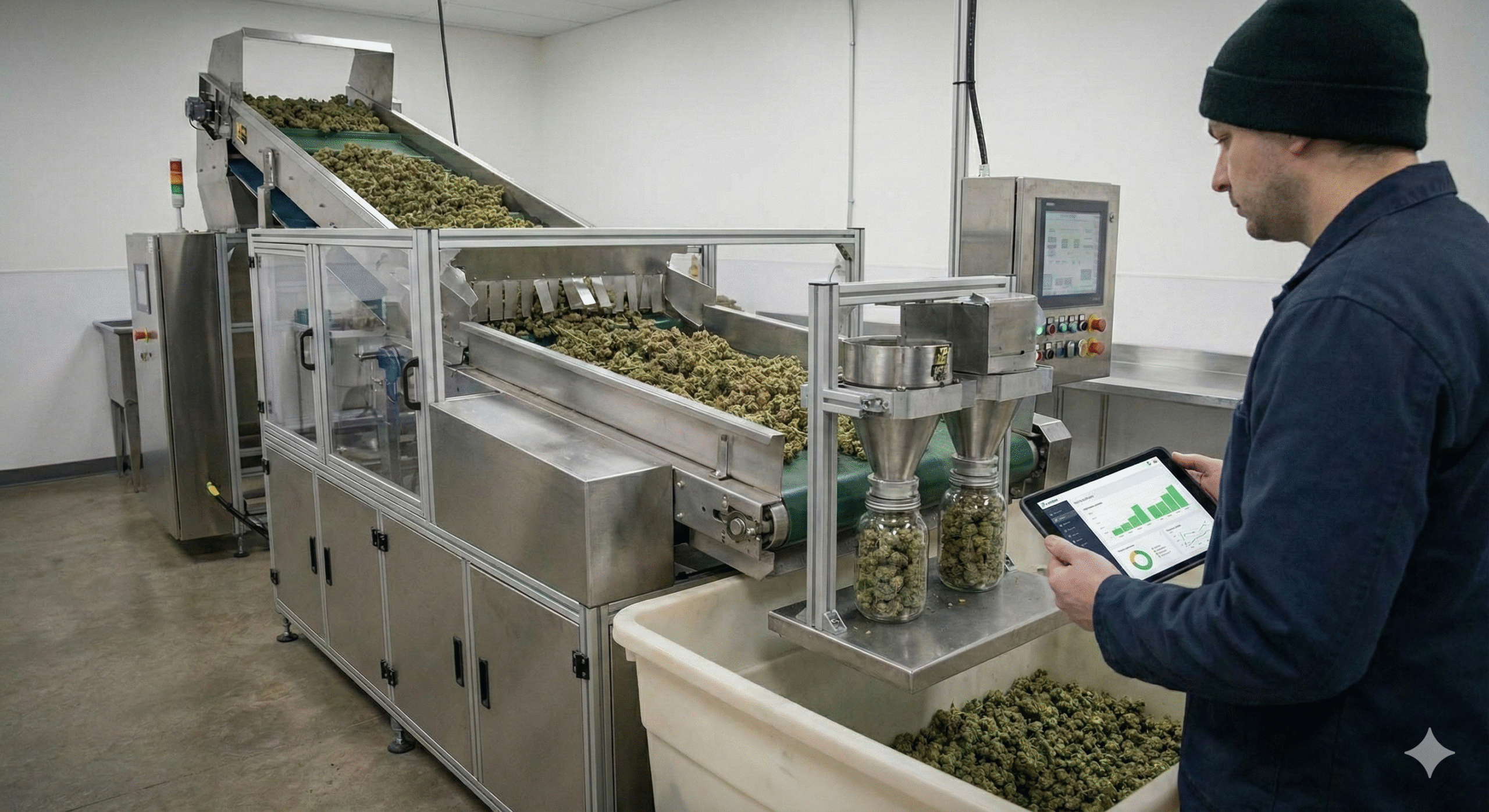
Automation in cannabis operations can streamline a variety of repetitive, time-consuming tasks—from inventory tracking to compliance reporting—helping businesses operate more efficiently and reduce the risk of human error. By automating these tasks, companies can free up valuable time and resources, which can then be focused on growing the business and improving customer experiences.
Reducing Time-Consuming Manual Processes
For many cannabis businesses, managing inventory is one of the most complex and time-consuming tasks. Manual tracking of inventory, product movements, and sales data can result in errors, delays, and inefficiencies. Automation solves this problem by enabling real-time updates of inventory levels, tracking product movements from seed to sale, and generating automatic alerts when stock is low or when products need restocking. This ensures that businesses have an accurate view of their inventory at all times, reducing the likelihood of stockouts or overstocking, both of which can have negative financial implications.
Simplifying Compliance and Reporting
Cannabis businesses are subject to numerous regulations, and staying compliant is essential. However, manually tracking compliance requirements can be overwhelming, especially with the constant changes in laws and regulations. Automation makes compliance easier by automatically generating the necessary reports, tracking product testing, and ensuring all documentation is in order. This not only saves time but also reduces the risk of non-compliance, which can lead to hefty fines or even the loss of business licenses.
Scaling Operations Without the Added Overhead
As businesses grow, manual processes can become bottlenecks that prevent further scaling. Automation helps cannabis companies scale operations without the need for additional staff or resources. Whether it’s automated inventory management, sales reporting, or compliance checks, automation allows businesses to expand without the added overhead of manual systems. This scalability makes it easier for businesses to meet the demands of a growing market while keeping costs under control.
How AirMed Can Help
Our cannabis management software is designed to automate many of the time-consuming tasks that businesses face. From inventory tracking and sales reporting to automated compliance checks, AirMed helps you streamline your operations. By eliminating manual processes, you can not only save time and money but also ensure that you remain compliant with ever-changing regulations. AirMed lets you focus on what matters most—growth and customer satisfaction—while we take care of the back-end operations.
With AirMed, automation is no longer a luxury. By automating routine tasks, AirMed can help your cannabis businesses reduce costs, minimize human error, and scale operations more efficiently. Investing in automation tools is an investment in the future of your business.
Read more about our inventory management here: https://airmedcloud.com/airmed-inventory-management/
Learn about the AirMed automation features here: https://airmedcloud.com/airmed-5-templates/
For more information visit our Software page.
Canadian Cannabis Research Summit 2026: May 27-29 in Toronto
Canada’s most comprehensive forum on the science behind cannabis, its potential therapeutic benefits and the societal and health impacts of legalization of non-medical cannabis from leading researchers and physicians in the field.
Join the largest national gathering of Canadian cannabinoid medicine researchers, clinicians, trainees and allied healthcare practitioners that will showcase research being conducted from coast to coast. This event will also continue detailed discussions on the latest cannabinoid research, clinical care and future government policies.
This event is co-hosted with the Toronto Cannabis and Cannabinoid Research Consortium and is being held at Chestnut Conference Centre, 89 Chestnut St, Toronto, Ontario.
For more information visit: https://ccic.net/ccic-conference/

Report: Global Medical Cannabis 2026-2030
The Global Medical Cannabis Market Review examines the status and dynamics of the international medical cannabis supply chain, highlighting emerging developments and trends in key international markets.
Published by Prohibition Partners, the report provides country-specific data and analysis, comparing countries based on relevant metrics including volumes of exports and imports, market size, domestic production, product and distribution landscape.
Prohibition Partners was founded in 2017 with a vision for a legal cannabis industry where the abundant economic, societal and health benefits of the plant can be realised by people around the world. This report includes market sizing and patient population forecasts for 14 key international markets – from 2026-2030. Also included is graphical and narrative analysis of the market size and the driving forces behind growth. In addition, scenario forecasting for Australia & Germany will also be included.
The Review delves deeper into the driving forces behind international import and supply chain dynamics, as well as factors such as: domestic production capabilities in various countries, the impact of telemedicine on patient access and care, and recent regulatory changes that shape the landscape of medical cannabis. By analysing these elements, the Review aims to offer insights into market growth potential and the evolving global context of medical cannabis supply and demand.
For more information about this report, including a 45-page free download, visit:
https://prohibitionpartners.com/reports/global-medical-cannabis-market-review-2026/

Cannabis Europa London 2026: May 26-27

Join 1500 attendees, 70 speakers and 50 exhibitors in London this May for Cannabis Europa London 2026.
Cannabis Europa brings together the brightest minds in cannabis policy, business, and investment. Over two days in London, you’ll engage with policymakers, investors, scientists, and entrepreneurs to explore opportunities in one of the world’s fastest-evolving markets.
The speakers are global thought-leaders driving change in policy, research, and commerce. Hear their insights, challenge your thinking, and leave with actionable strategies.
From high-level policy debates to practical market strategies, Cannabis Europa London 2026 is designed to give you the knowledge and connections you need to lead.
For more information visit: https://www.cannabis-europa.com/