
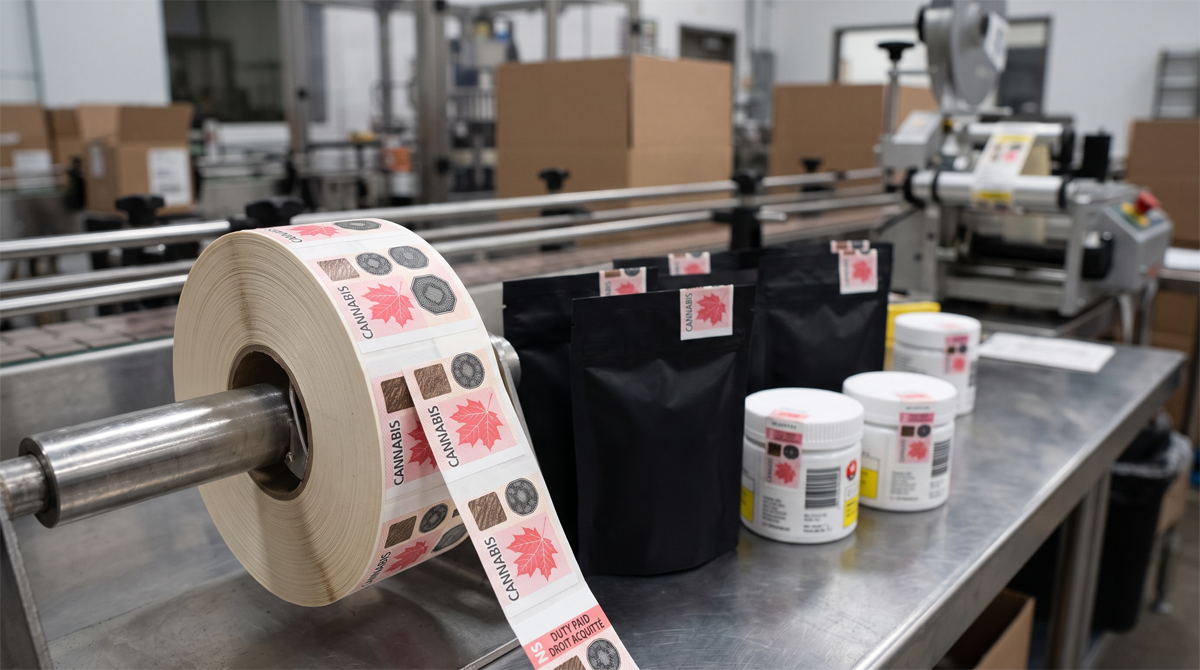
A Single National Cannabis Excise Stamp? Streamlining Supply Chain and Packaging
Since the legalization of adult-use cannabis, licensed producers across Canada have managed a complex web of packaging regulations. One of the most significant logistical hurdles has been the administration of provincial and territorial excise stamps. Juggling distinct jurisdictional stamps has historically complicated inventory management.
In December 2024, the Department of Finance introduced the transition toward a unified national stamp as a policy initiative to address long-standing industry complaints regarding internal trade barriers and administrative friction. The proposed shift toward a single, harmonized national excise stamp, would provide a much-needed streamlining of operations. So if this were to happen, what are the benefits for producers?
Easing the Burden on Packaging Lines
Under the current framework, packaging lines often required frequent stops and changeovers to swap rolls of provincial stamps. This start-and-stop approach inevitably reduces daily throughput. A unified national stamp would allow for continuous-run packaging operations. By minimizing the need to recalibrate labelling equipment for different jurisdictions, producers could significantly decrease machine downtime and mitigate the risk of misapplication errors. Furthermore, this operational efficiency translates into better labour optimization. Packaging staff could redirect their focus from manual stamp audits and line changeovers to overarching Quality Assurance (QA) and strict adherence to Good Production Practices (GPP).
Enhancing Inventory Agility and Reducing SKU Proliferation
Currently, once a product is stamped for a specific province, it can become captive stock for that region. If demand spiked in British Columbia but lagged in Ontario, producers cannot easily reallocate those finished goods. A national stamp would let producers allocate inventory dynamically based on real-time market demands rather than relying exclusively on predictive forecasting. Additionally, consolidating product lines reduces the proliferation of redundant SKUs, freeing up highly valuable, secure storage space within facility vaults.
Financial Reconciliation and Traceability
While the physical application of stamps would be simpler, the backend data management remains as critical as ever. A national stamp would reduce the administrative overhead associated with calculating and reconciling provincial duty rates during the physical packaging phase. However, producers must remember that strict provincial tracking and reporting requirements—including the monthly Cannabis Tracking and Licensing System (CTLS) reports—remain unchanged. Accurate digital tracking of where finished goods are shipped is a fundamental compliance requirement.
Status of the Reform
While the federal government formally announced its intention to explore a single national cannabis excise stamp, the Canada Revenue Agency (CRA) has not yet released a firm implementation date, technical rollout schedule, or finalized legislation. Because provincial duty top-ups are currently tracked through jurisdiction-specific stamp colours and codes under the Coordinated Cannabis Taxation Agreements (CCTAs), changing to a single stamp requires ongoing administrative alignment between federal and provincial tax authorities. The operational reality is that licensed producers must continue using the individual provincial and territorial stamps until formal regulations and CRA transition guidelines are officially enacted into law.
Moving Forward
The transition to a single national cannabis excise stamp would represent a major step forward for operational efficiency within the Canadian cannabis sector. By reducing bottlenecks on the packaging line and providing greater flexibility in inventory allocation, producers could better align their output with dynamic consumer demand. Industry experts agree that this would be a positive move forward.
