

AirMed and FDA CFR 21

We are sometimes asked if AirMed meets FDA standards. First, please be aware that the FDA is a department of the US government. The specific portion of FDA regulations relevant to software such as AirMed is part CFR 21. As it is an American standard, Health Canada does not require CFR Part 21 compliance as part of the Cannabis Act Regulations. And while AirMed was designed for the Canadian cannabis industry and to comply with Health Canada regulations, AirMed does conform to CFR Part 21 with respect to electronic record keeping, audit trails, and electronic signatures.
Many agencies throughout the world are responsible for issuing and enforcing regulations that affect businesses. The regulations affecting software such as AirMed are typically those related to records management compliance. And while there are many regulatory agencies involved in records management, for the most part the regulations themselves are similar from country to country and agency to agency. The purpose of them, in general, is to ensure the security, confidentiality and authentication of electronic records.
The U.S. FDA regulates food, drugs, medical devices, biologics, animal feed and drugs, cosmetics and radiation-emitting products such as cell phones for the U.S.A. The FDA’s rules for manufacturing and distribution are designed to protect consumers and promote public health. In the U.S. Code of Federal Regulations (CFR), Title 21 deals with Food & Drugs. Until recently, the regulations in this title required paper records with handwritten signatures.
Back in 1997, part 11 of 21 CFR was enacted to cover the use of electronic records and electronic signatures. Commonly known as 21 CFR 11, this part defines the criteria “under which the agency considers electronic records, electronic signatures, and handwritten signatures executed to electronic records to be trustworthy, reliable, and generally equivalent to paper records and handwritten signatures executed on paper.”
Essentially, the concerns about using electronic records are that records may be lost in a system crash, the data may become corrupt or modifications may be made without proper authorization. In addition, since printed documents with hand-written signatures are recognized as legally binding on the signators, the agencies are looking for ways to make electronic records similarly binding on their owners. The regulations have been proposed to ensure that whenever an organization replaces printed documents with electronic data, there are checks and balances in place to ensure integrity of the electronic records so that they can be legally equivalent to printed records.
AirMed has a range of features that satisfy standards for security, authentication, validation and auditing as outlined in 21 CFR 11 and other regulations.
For more detailed information visit: Code of Federal Regulations (CFR) | FDA
For more information on how AirMed helps you meet compliance, visit our Compliance page or our Frequently Asked Questions page. If you’d like to discuss your specific needs, please give us a call at 1-877-313-2442 or use one of the contact forms to start the ball rolling.


Report: GS1 Trends 2023/2024
Selling any product, including cannabis, starts with a unique identification number from GS1. The GS1 (Global Standards 1) organization is a neutral, global collaboration platform that brings industry leaders, government, regulators, academia, and associations together to develop standards-based solutions to address the challenges of data exchange.
GS1—which has local Member Organisations in 116 countries, over two million user companies and 10 billion transactions every day—helps ensure that there is a common language of business across the globe. GS1 manages the Global Trade Item Number or GTIN, which identifies companies and their products and services using barcode data.
“Trend Research 2023-2024” is a report published recently by GS1 that discusses the top business trends in the world. Topics include data privacy, supply chain digitalisation, traceability and new technologies.
“A cornerstone of any digital transformation are the concepts that are core to the GS1 system: globally unique identification, a common data language, a commitment to interoperability and a firm belief that business value achieved through data sharing is amplified through the use of standards.”
For more information and to download the report visit:
https://www.gs1.org/resources/articles/trend-research-2023-2024-innovation-world-continuous-disruption

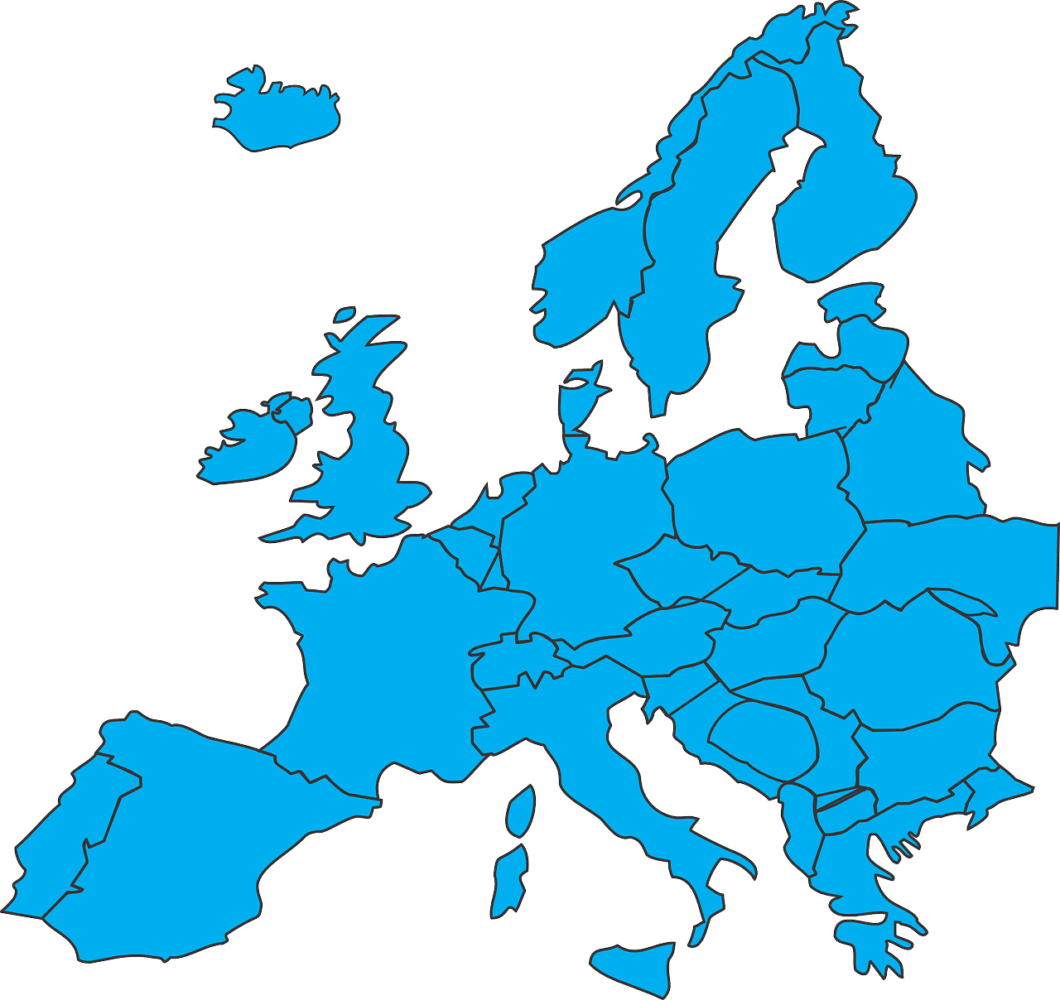
Exporting Cannabis to the EU
In a previous post, we discussed how some Canadian producers are selling excess inventory to export markets, including Europe.
In “The Europe Medical Cannabis Market,” Market Data Forecast reports, “The medical cannabis market in Europe is expected to grow from USD 4.96 billion in 2022 to USD 13.37 billion by 2027, growing at a CAGR [compound annual growth rate] of CAGR 21.96% from 2022 to 2027.”
Based on that report, Europe appears to be a significant marketplace for cannabis. But to sell into that market, the exporter must meet the region’s standards. In the case of Europe, those standards include the European Union’s Good Manufacturing Practices, referred to as EU GMP.
In their article, “A Look at Canadian Cannabis Exports,” published in 2021, The Business of Cannabis reported one reason why exports jumped in 2020. “In Canada, more cultivators gained the European Union’s Good Manufacturing Practices (EU GMP) certification, allowing them to export to that continent. More than a dozen Canadian LPs now have EU GMP certified facilities.”
Meeting EU GMP standards is critical for exporting into the European marketplace. But what is EU GMP and how does it differ from the standards Canadian companies already meet?
Health Canada requires that Canadian licensed producers comply with Good Production Practices or GPP standards. If you are a licensed producer in Canada, you are already familiar with GPP. If not, these standards are explained on the Health Canada website.
Essentially, GPP requires that cannabis businesses have appropriate procedures for all activities related to producing a product that is safe for public consumption. GPP mandates that systems be in place to ensure quality and traceability.
Good Manufacturing Practices, GMP, takes GPP further including requiring more stringent testing.
The Foundation of Cannabis Unified Standards (FOCUS) states, “GMP is the proactive part of quality assurance. It is designed to minimize the risks involved in all steps of the manufacturing process. A basic tenant of GMP is that quality cannot be tested into a product. It must be built into each batch of product during all stages of the manufacturing process.”
Originally designed for pharmaceutical products, GMP can be applied to any production process and is a requirement for those wishing to market medical cannabis in Europe.
The EU GMP standards are complex, and the information can be difficult to navigate, especially how it applies to cannabis.
But the Canadian government has published guidelines designed to help manufacturers meet GMP standards. Their guidance document has been written “with a view to harmonize with GMP standards from: the World Health Organization (WHO); the Pharmaceutical Inspection Cooperation/Scheme (PIC/S); the International Council on Harmonisation (ICH); the International Cooperation on Harmonisation of Technical Requirements for Registration of Veterinary Medicinal Products (VICH); other regulatory agencies in other countries.”
While the EU is not mentioned specifically, these Canadian standards are a good starting point for cannabis companies considering exporting into other markets. These guidelines will help producers understand what is required and can be used as a stepping stone toward EU GMP certification.
According to the media, the EU standards are stringent, and certification can be time-consuming and costly. But with a market as large as Europe, Canadian companies are in a position to benefit from the opportunities that an EU GMP certificate can offer.
To access the resources quoted here, use the following links:
- https://businessofcannabis.com/a-look-at-canadian-cannabis-exports/
- https://www.marketdataforecast.com/market-reports/europe-medical-cannabis-market
- https://www.focusstandards.org/gmp-cannabis-industry/
- https://www.gmp-compliance.org/guidelines/gmp-guidelines
- https://www.canada.ca/en/health-canada/services/drugs-health-products/compliance-enforcement/good-manufacturing-practices/guidance-documents/gmp-guidelines-0001/document.html

Can Canadian Producers Export Excess Supply?
With media reporting oversupply challenges in the Canadian cannabis industry, can producers turn to export markets to sell their inventory? The answer might be yes. As countries around the world legalize cannabis, new opportunities are emerging for producers in Canada.
Canadian companies have been exporting cannabis for several years already. In fact, back in June 2020, MJBizDaily published a two-part article on Canada’s export of medical cannabis during 2019. Part 1 was titled, “Canada exported record amount of dried cannabis in 2019…” Part 2 reported, “Canadian exports of medical cannabis oil jumped fivefold in 2019.”
Canadian Regulatory Review reported in September of 2020 that the Canadian government had even become supportive of cannabis exports. “On the export side, and to further bolster trade, as of January 2020, the federal government through Canada’s Trade Commissioner Service extended trade commissioner services for Canadian cannabis companies exporting cannabis for medical and scientific purposes.”
A few months after that article, in April 2021, Prohibition Partners released a report called “Revealed: The Canadian Cannabis Export Market for 2020.” The report notes that the largest export markets for Canada at the time were Germany, Australia, Israel and the United Kingdom. “…new data shows a huge increase in the exports of cannabis from the country in 2020, as well as a changing network of countries that are importing from established producers in Canada.”
In May of that same year, Business of Cannabis took “A look at Canadian cannabis exports,” noting that “Dried cannabis flower and cannabis oil exports more than doubled in 2020, while imports dropped to virtually zero…”
An article titled, “How Canada’s Oversupply of Cannabis Is an Export Opportunity,” was published in October of 2022 by Canadian Cannabis Exchange. “As the demand for cannabis legalization increases internationally, Canada has the opportunity to become the world leader in cannabis exports… The European Union is proving to be a lucrative market for Canadian exports.”
To read the full articles quoted here, visit the following links:
- https://mjbizdaily.com/canada-exported-record-amount-of-dried-cannabis-in-2019/
- https://mjbizdaily.com/canadian-exports-of-medical-cannabis-oil-jumped-fivefold-in-2019/
- https://www.canadaregulatoryreview.com/international-trade-in-cannabis-international-and-domestic-regulatory-developments/
- https://prohibitionpartners.com/2021/04/30/revealed-the-canadian-cannabis-export-market-for-2020/
- https://businessofcannabis.com/a-look-at-canadian-cannabis-exports/
- https://canadiancannabisx.com/how-canadas-oversupply-of-cannabis-is-an-export-opportunity/

Software Validation for Cannabis Processors
One of the challenges for cannabis processers is that regulations require them to validate their extraction practices. In many cases, those practices involve the use of software. Therefore, any software used in relation to production must be validated along with the practices.
As tracking production reliability is an important part of meeting compliance, most tracking involves the use of software.
Software vendors are responsible for ensuring the software they sell works as described. But, validating that software is the responsibility of the processor. Why? Because every organization operates differently, and validation must be done in relation to actual production practices.
If you are using AirMed as your system-of-record, you will need to validate our software as it is used in your facility.
AirMed helps you through the validation process by providing test scripts that can be used to validate each task in the workflows that relate to extraction processes. These test scripts show what the software was designed to do, how the software should be used for that specific task and what the end result should be.
We can provide you with a validation report outlining how we meet software vendor compliance. Our validation report details how our software complies with security, privacy and accessibility requirements. AirMed software has been designed to not only meet compliance with Canada’s Cannabis Act but also to support and comply with Federal and Provincial privacy legislation and regulations (PIPEDA, PIPA, PHIPA, PHIA). AirMed also meets the standards outlined in the US FDA 21 CFR Part 11, which many other specifications are based on.
Our internal procedures have been through an external vendor audit for the pharmaceutical industry and passed with no observations.
If you’d like to learn more about good production practices for cannabis in Canada, the Government of Canada has published GPP guidance information here: https://www.canada.ca/en/health-canada/services/cannabis-regulations-licensed-producers/good-production-practices-guide/guidance-document.html
For more information on how AirMed helps you meet compliance, visit our Compliance page or our Frequently Asked Questions page. If you’d like to discuss your specific needs, please give us a call at 1-877-313-2442 or use one of the contact forms to start the ball rolling.

Support for GS-1 Barcoding Standards in AirMed
AirMed software offers full functionality for multi-level packaging with layered barcoding that meets GS-1 barcode standards. This is the standard required to sell to provincial government distributors.
Licensed producers who use AirMed can assemble retail-ready individual product packages using a ‘master case’ system and identify and track products at each packaging level.
AirMed software offers full SKU and barcode management that supports GS-1 barcoding standards. Pricing can be set at the package or master case SKU, and custom pricing can be set for specific SKUs by customer. The software offers features for creating and processing the orders as well as fulfilling and shipping them to provincial agencies.
Our master case processing lets you use layered barcoding for individual containers through to cases of multiple containers. The AirMed track-and-trace system allows retail packages to be traced to the lot or batch and ultimately back to the original genetic material. And AirMed has a comprehensive multi-step recall process that completely automates recalls if they are ever needed.
To schedule a live demonstration of AirMed Cloud software, call us at 1-877- 313-2442 or click the Request Demo button at the top of the screen.
For more information on how AirMed helps your business, visit our Software page or our Frequently Asked Questions page. If you’d like to discuss your specific needs, please give us a call at 1-877-313-2442 or use one of the contact forms to start the ball rolling.

Cannabis in Canada: Get the Facts
Do you have questions about cannabis in Canada? Would you like to understand the laws that govern the Canadian cannabis industry? Are you considering applying for a license to cultivate, process or sell cannabis?
The federal government has a webpage that outlines what industry needs to know about cannabis in Canada. This information covers the basics related to doing business in the cannabis industry including:
Impact of the new law and regulations on industry
- Applying for or amending a federal licence
- Packaging and labelling requirements
- Cannabis Tracking and Licensing System requirements
- Compliance and enforcement under the Cannabis Act
- Prohibitions on promotions
- and more
The page provides links to relevant sections of the federal government website where you can find more information on each topic.
https://www.canada.ca/en/services/health/campaigns/cannabis/industry.html
For more information on how AirMed helps you meet compliance, visit our Compliance page or our Frequently Asked Questions page. If you’d like to discuss your specific needs, please give us a call at 1-877-313-2442 or use one of the contact forms to start the ball rolling.

Reporting & Auditing in AirMed

AirMed software is specifically designed to meet or exceed Cannabis Act regulations with full audit support capabilities and comprehensive reporting. AirMed regularly passes Health Canada inspections. For more information visit our Compliance page.
AirMed is designed to support and comply with federal, provincial and local legislation. In fact, AirMed meets the USA’s FDA 21 CFR Part 11 regulations. Considered to be some of the most comprehensive electronic record keeping specifications in the world, they are the basis for the standards set by many countries.
AirMed pulls all the required information for all government reporting, whether monthly, quarterly, or annually. Reports are built in for Cannabis Licensing & Tracking System (CTLS) and Canada Revenue Agency (CRA). Supporting sub-reports provide the necessary validation detail. Export data to other systems or print reports to retain the required information outside of AirMed as archived printed or electronic records.
Every action/workflow in AirMed is auditable, and built-in audit reports & forms provide complete product traceability. Inventory, recall, destruction and other reports can be generated as needed. Authorized site auditors can be given access to perform inspections of records. AirMed retains all data indefinitely and lets you export or print reports to be held for required retention periods for audit purposes.
For more information about AirMed’s reporting and auditing features, schedule a free demo by clicking the Request Demo button at the top of the page or by using the contact form in the footer. You can also call us directly at 1-877-313-2442.

How Secure is AirMed Software?

AirMed seed-to-sale software is a Cloud-based platform hosted in a third-party, Tier 3, SSAE 18 SOC1/SOC2 compliant, hardened data center in Canada, and all data remains in Canada. The same data center is used by Canadian banks and government agencies to secure their web-based applications. All data in AirMed is protected by fully managed and monitored enterprise firewalls and intrusion detection/prevention systems.
All communication between the browser and the server is encrypted using SSL. Sensitive data is additionally encrypted while at rest in the database. When a barcode is scanned, the resulting code is input into a field within the web browser. This data is then encrypted and sent to the server for processing.
Administrators can configure access based on an employee security profile so that individual workers only have access to the functions and data that relates to their job responsibilities. Electronic signatures and multi-factor authentication ensure only authorized users can access information and complete tasks. Full audit trails for every record and every action in the system allows administrators to review changes anywhere at any time.
All data is backed-up both locally in the data centre for near-line recovery and to a secure offsite location in Canada for disaster recovery purposes.
To learn more about AirMed’s privacy and security, contact us today by using the contact form or by clicking the Request Demo button at the top of the screen. You can also give us a call at 1-877-313-2442.

AirMed Compliance Documents for Health Canada Cannabis License Applicants

The Cannabis Act requires that license applicants provide information on how they expect to meet certain compliance requirements.
We offer full support throughout your license application process and provide documentation that outlines how AirMed meets Health Canada requirements. If you plan to use AirMed for compliance after you are licensed, you submit the documents we supply as part of your application. We also partner with specialists in licensing applications and business management if you need more help.
For applicants who expect to use AirMed to help meet compliance, we provide two comprehensive documents designed for submission with license applications.
AirMed Record Keeping Compliance: This document provides an overview of how AirMed provides support to enable a licensed producer to be compliant with the record keeping & reporting requirements of the Cannabis Act and Regulations (CAR) and the former Canadian Access to Cannabis for Medical Purposes Regulations (ACMPR). This document is intended to assist compliance auditors and internal compliance leaders in assessing readiness in relation to CAR requirements, as well as security and privacy standards.
AirMed Good Practices Compliance: This document provides an overview of how AirMed provides support to enable a licensed producer to be compliant with the good practices requirements of the Cannabis Act and Regulations (CAR).
For more information or to purchase our compliance documents, please call 1-877-313-2442 or email info@airmed.ca. You can also fill out the contact form in the footer.
For more information on how AirMed helps you meet compliance, visit our Compliance page or our Frequently Asked Questions page.

What happens with my seed-to-sale software if regulations change?

The market for cannabis is evolving. Health Canada manages oversight and sets the compliance requirements for legal production of cannabis in Canada. In the last five years, these requirements have changed multiple times and are set to change again with the legalization of cannabis for recreational use on October 17, 2018. A responsible software vendor will ensure that all its clients have the information they need to comply with the latest Health Canada requirements.
With SaaS or cloud-based seed-to-sale platforms, software updates are usually global to all clients/users. On-site implementations sometimes require individual upgrades performed by the client in conjunction with the vendor. Often this means scheduling both parties, which can delay access to the latest features and functionality. If there are modifications for specific clients, this can mean a complicated upgrade path with the risk of unintended software bugs and related down time or additional costs to re-customize.
As you choose your seed-to-sale software solution, be sure to consider the future of compliance and those implications on your business. No one knows for sure what the future holds, but history has shown that the only true constant is change.
For more information about the Cannabis Act in Canada visit: What you need to know about cannabis – Canada.ca
For more information, download our software buyer’s guide here: How to Purchase Seed-to-Sale Software

AirMed supports wholesaling to provincial distributors

AirMed Cloud seed-to-sale software supports wholesale selling and shipping from licensed producers to other LPs and from LPs to provincial distribution centres.
As a cannabis management system, our software offers full functionality for multi-level packaging with layered barcoding that meets GS-1 barcode standards. LPs using AirMed can assemble retail-ready individual product packages using a ‘master case’ system and identify and track products at each packaging level.
“Our master case processing lets you use layered barcoding for individual containers through to cases of multiple containers,” noted Justin Hearn, President and CEO of AirMed Canada Systems Inc. “AirMed’s track-and-trace system allows retail packages to be traced to the lot or batch and ultimately back to the original genetic material. And AirMed’s comprehensive multi-step recall process completely automates recalls if they are ever needed.”

AirMed software offers full SKU and barcode management that supports GS-1 barcoding standards. Pricing can be set at the package or master case SKU, and custom pricing can be set for specific SKUs by customer. The software offers features for creating and processing the orders as well as fulfilling and shipping them to provincial agencies.

“We’re proud to be supporting our customers with full master case inventory control, GS1 integration, comprehensive wholesale order management, efficient fulfillment and tracking, and compliance reporting,” said Hearn. “AirMed’s wholesale distribution module is helping LPs produce, prepare, sell and ship hundreds of thousands of products to the recreational market right across Canada.”
For more information on how AirMed helps your business, visit our Software page or our Frequently Asked Questions page. If you’d like to discuss your specific needs, please give us a call at 1-877-313-2442 or use one of the contact forms to start the ball rolling.

ACMPR and the licensed cannabis producer

What does ACMPR cover?
For the cannabis industry in Canada, the most critical compliance implications are those covered by the Access to Cannabis for Medical Purposes Regulations. This legislation covers every aspect of marijuana production and sale. Overseen by Health Canada, these regulations must be adhered to at every stage of cannabis business from propagation through to sale. As of August 24, 2016, the Access to Cannabis for Medical Purposes Regulations (ACMPR) replaced the previous Marihuana for Medical Purposes Regulations (MMPR).
ACMPR is designed to provide an immediate solution for Canada to meet legal requirements. But Health Canada is continuously evaluating how a system of medical access to cannabis should function alongside the government’s commitment to legalize, strictly regulate and restrict access to cannabis. As a result, laws and regulations may change.
Currently, the legislation contains four parts.
Part 1 sets out a framework for commercial production by licensed producers responsible for the production and distribution of quality-controlled fresh or dried marijuana or cannabis oil or starting materials (i.e., seeds and plants) in secure and sanitary conditions.
Part 2 sets out provisions for individuals to produce a limited amount of cannabis for their own medical purposes or to designate someone to produce it for them.
Parts 3 and 4 include transitional provisions, consequential amendments to other regulations, and provisions repealing the MMPR.
All those wishing to produce cannabis in Canada must apply to Health Canada to become a licensed producer under the ACMPR legislation, and all licensed producers MUST comply with the ACMPR regulations.
What are the specific ACMPR regulations that affect software and record keeping?
The ACMPR has many regulations that apply to the medical marijuana industry in Canada as a whole. Not all of those have implications for record keeping or to the method (software) used for that record keeping. (For links to the different websites that cover ACMP download our Seed-to-Sale Software Buyer’s Guide.)
How do I meet ACMPR compliance?
To be ACMPR compliant, your organization must have ways of meeting all of the regulations listed above.
Many of the regulations listed above apply to processes, so you’ll need to be utilizing best practices and documented standard operating procedures. You’ll also need to be able to prove to Health Canada that you have used best practices. That’s where seed-to-sale software comes in. Your cannabis business management software should provide you with the means to meet compliance when it comes to record keeping and reporting.
To support you in this process, a viable software vendor will supply you with a document that outlines exactly how the system they provide meets those requirements.
For a free demo to learn how AirMed meets these and other regulations, please email info @ airmed.ca.