
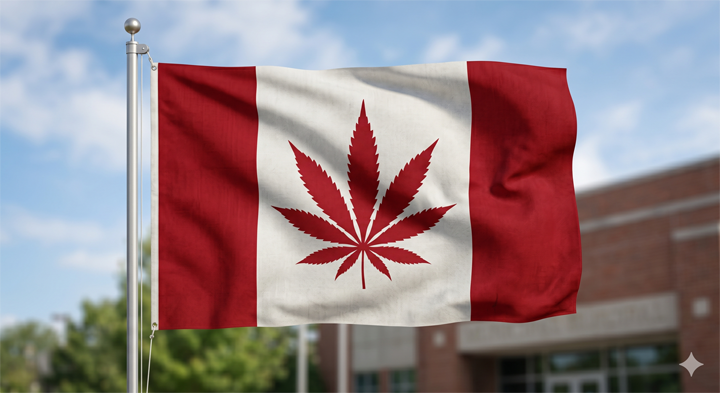
On this Canada Day we’d like to reflect on the road legalized cannabis has travelled in Canada so far.
2001: Medical Cannabis Framework Evolution
The Marihuana Medical Access Regulations (MMAR) came into force on July 30, 2001. This was Canada’s original medical cannabis framework, establishing the first legal pathways for patient possession and personal production licenses. MMAR was created to give patients a secure, legal supply of cannabis if they suffered from terminal illnesses or severe chronic conditions (like multiple sclerosis, spinal cord injuries, or severe arthritis). Before the MMAR, possessing or producing cannabis for any reason was strictly a criminal offense. The MMAR changed the legal landscape by establishing that Canadians had a constitutional right to access cannabis if a physician deemed it medically necessary.
2013: Marihuana for Medical Purposes Regulations (MMPR)
While groundbreaking, the MMAR model faced several practical challenges, so Health Canada decided to phase out the MMAR and transition to a commercialized, highly regulated system with strict quality control. This led to the creation of the MMPR, which removed home-grows entirely and birthed the modern “Licensed Producer” (LP) industry that exists today.
The initial implementation of MMPR occurred on June 19, 2013. This regulation created the commercial framework, shifting production away from home-grows toward a regulated network of licensed commercial producers (LPs). MMPR fully replaced MMAR April 1, 2014.
2016: Access to Cannabis for Medical Purposes Regulations (ACMPR)
ACMPR was announced August 11, 2016 and came into Force: August 24, 2016 and was enacted following the Allard v. Canada court ruling. This framework combined the commercial LP structure of the MMPR while restoring the legal right for authorized patients to grow a limited supply at home.
2017: Cannabis Act (Bill C-45)
The Cannabis Act established the framework for recreational (adult-use) cannabis in Canada. Bill C-45 was passed by the House of Commons on November 27, 2017, with the final senate vote on June 19, 2018. The act received Royal Assent and became law. on June 21, 2018, but officially came into force on October 17, 2018, known as Legalization Day in Canada.
This officially replaced the previous medical regulations (subsuming medical access under the broader Cannabis Act) and fully legalized adult-use recreational dried flower and oils nationwide.
2019: Amended Cannabis Regulations (“Cannabis 2.0”)
Exactly one year later, on October 17, 2019, amendments legally permitted the production, distribution, and sale of alternative product formats, specifically edibles, extracts, and topicals.
2022: The Beverage Equivalency “Math Fix”
Early regulations suffered from a flawed math formula regarding public possession limits for liquid cannabis beverages. In December 2022 Health Canada corrected the formula, unlocking the commercial potential of the cannabis beverage category.
2025: “Omnibus” Regulatory Streamlining
Following the independent Expert Panel’s legislative review, Health Canada introduced a massive regulatory relief package to alleviate administrative burdens on Licensed Producers (LPs).
2026: Packaging and Labelling Modernization
In March 2026, a major shift in packaging rules hit full enforcement. The initial, heavily restrictive “plain packaging” mandates were updated to support eco-friendly initiatives and better consumer education.
2026: Mature Market
Today, the cannabis market in Canada is a highly mature, disciplined industry focused on margin protection and hyper-localized supply chains. Statistics Canada figures show that small independent operators form the true backbone of the market—over 51% of legal retail stores employ fewer than four people, and micro-cultivation licenses remain the most popular category. General volume-driven cannabis has faced heavy price compression. To survive, smaller cultivators are relying on hands-on methods (hand-trimming, hang-drying, rare genetics) to earn formal “Craft” designations. Where provincial frameworks allow, micro-producers and boutique processors are shifting away from massive central distribution hubs to utilize direct-delivery capabilities, connecting directly with independent retail networks to protect product freshness and margins.
To read Health Canada’s deep dive into the legislative background, policy goals, and public health data compiled since 2018, review the Government of Canada Cannabis Act Progress Report. https://www.canada.ca/en/health-canada/programs/engaging-cannabis-legalization-regulation-canada-taking-stock-progress/document.html
For a highly detailed chronological deep dive into the country’s drug legislative changes stretching back to 1908, read the Wikipedia Legal History of Cannabis in Canada Page. https://en.wikipedia.org/wiki/Legal_history_of_cannabis_in_Canada
To explore how public opinion shifted and understand the social factors that ultimately influenced the federal government to draft Bill C-45, see The Canadian Encyclopedia Legalization Summary. https://thecanadianencyclopedia.ca/en/article/marijuana-legalization-in-canada
To listen to or read an exploration of how a virtually unknown plant became a multibillion-dollar legal market after nearly a century of bans, check out the CBC Radio: The Long, Strange Story of Pot Prohibition in Canada feature. https://www.cbc.ca/radio/ondrugs/the-long-strange-story-of-pot-prohibition-in-canada-1.4541890